Anxiety Wants Us to Listen, Not Panic
Instinctually, people want to run from anxiety, avoid it, or force it away with substances. We tend to look outward toward whatever we think is causing our anxiousness. It is important to understand that anxiety is not an illness. It is a symptom.
There are times when anxiety is debilitating and it is necessary to get help from a professional. If you even have an inkling that you need help, please seek it out from a professional. If that is not an option for you or if your anxiety is not severe, I hope what I am sharing here may offer some DIY help.
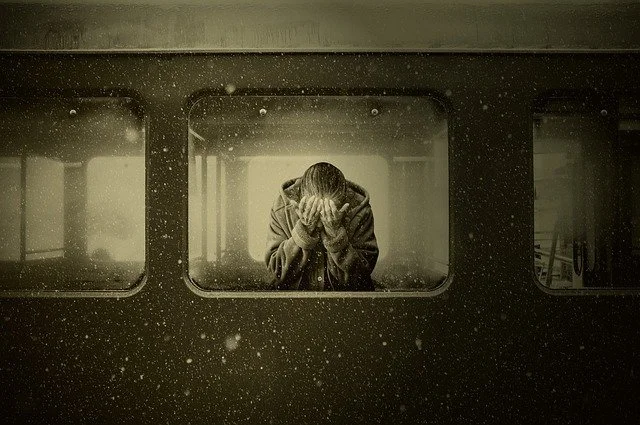
Anxiety, is your body’s way of waving a red flag saying, “look at me, in here, I need your attention!”
Anxiety happens when we are triggered, and our sympathetic nervous system goes into fight or flight mode. A trigger is something outside of us that provokes a memory/feeling inside of our body, from another time. This is why typically, anxiety provokes us to look outward to find a cause, instead of in.
Every time we look away from it, we are missing an opportunity to heal.
In the moment, we may think that anxiety is just us. We have anxiety. End of story. We have issues. There are so many people suffering from anxiety over a wide variety of reasons. Why? Because everyone has different life experiences, that the body remembers. Yet, the feelings provoked, are very similar.
Anxiety is often the symptom, when a traumatic memory that is stuck in the body from another time, is being triggered. Energy must flow, but traumatic moments often imprint in the body as stuck energy, because as children, we didn’t have the opportunity to resolve the issue.
When the child doesn’t know what to do or how to process a situation, the feelings can freeze in the body. The ego often forms an identity around holding this scary thing in, so it doesn’t have to feel this way again.
This can work for a time. Whole personalities are created to revolve around preventing certain feelings from resurfacing. It’s when we become adults and try to function in society, that this easily triggered, fearful/anxious energy, can be debilitating.
There are ways to calm anxiety down and allow for a gradual release. First, lower the intensity of the anxiety by taking deeper, belly breaths. Breathing slowly in and out through the nose helps activate the parasympathetic nervous system.
Then, instead of looking out at what provoked you, be present with the feelings in your body. You can even ask, “what is this about”?
Imagine anxiety is a scared child inside of you that is frozen in the time that it was first provoked. The first time you felt shame and had to pretend it wasn’t there. The first time you felt like you didn’t have anyone to help you. That time the big trauma happened.
This is all energy. Every thought, every emotion, every moment is made up of energy.
Every time we get angry or frustrated or try to push anxiety to the side, we are essentially forcing our inner child (and our body) to live through the same wound repeatedly. We abandon them, as they were abandoned in that moment.
We ignore their feelings, because we don’t have the time or the patience to deal with them right now. And when we don’t allow feelings to release, they compound. Not wanting to feel our past will eventually take its toll on our body in the present.
To truly heal our anxiety and any symptoms from triggers, we must allow the feelings and memories associated with it, to be understood and released.
First, separate yourself from the feelings. Be the observer of them. Understanding that your anxiety represents an energy imprint from another time, separates you from it. You are not your anxiety. You are not “anxious”.
Yes, it is there, but it is not you.
Then, can you envision why your child self may feel those feelings?
This is key, because as adults, we tend to chastise ourselves for having what feels like uncontrollable emotions. Yet if we see the feelings as though they are coming from a child that is scared, confused, or hurt, we won’t.
We wouldn’t get angry and shame a 5-year-old for feeling sad, scared, and confused. So too should we not feel those feelings toward this energy in our body. After all, it was likely a parent in the moment or someone older than us, that helped solidify those feelings at the time.
Take some time to see if a memory comes up that needs to be processed. If so, write it down in its entirety. Visualize the entire situation, and be present as a lucid, supportive adult for what your child self, went through. Talk to them and validate their feelings and allow any emotions to come up with the memory.
Freeing these emotions is a key step in alleviating what causes the anxiety.
When we treat our inner child the way they should have been treated in the moment they were traumatized, we help to end the cycle of anxiety.
Emotions are energy in motion; they just need to move. That’s all. When we were told to stuff our feelings away as children, essentially, we put them in a box in our body. And when we don’t free them, the tension of forcing it down only increases over our lifetime.
Anxiety is a scared kid inside of you. Don’t push them down, don’t run from them. Create a safe space for them. Breathe to help expand the space and calm your body. When anxiety arises, ask where it is coming from. Be supportive. Allow the feelings to be felt, and the fear, shame, or sadness to be heard.
You really can heal your past in the present and change the way you feel inside.